On August 23, 2025, the 28-day summer academic exchange program of the School of Nursing, Wenzhou Medical University (WMU) at Prince of Songkla University (PSU), Thailand, came to a successful conclusion. Jointly promoted by the two universities, the exchange was themed "Nursing Education and Practice from a Cross-Cultural Perspective", covering multiple sessions including clinical practice, cultural sharing, academic discussion, curriculum expansion, scientific research learning and life reflection. Ten outstanding WMU students broadened their international horizons and improved their professional literacy through in-hospital practical learning, classroom interactive discussions, cross-cultural exchange activities and scientific research exploration. They also gained profound insights into life values and nursing humanities. The exchange yielded fruitful results, which not only deepened the friendship between Chinese and Thai students, but also laid a solid foundation for future academic cooperation and talent cultivation between the two universities.
Clinical Practice (Part 1):
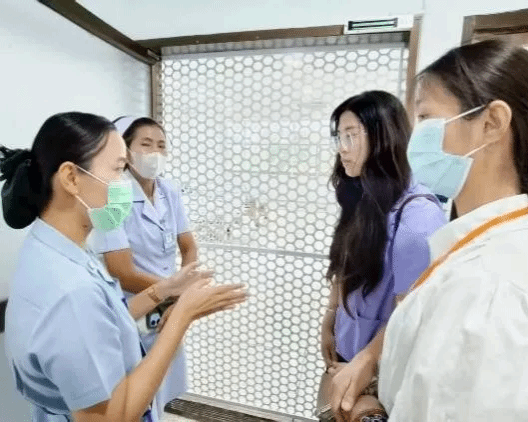
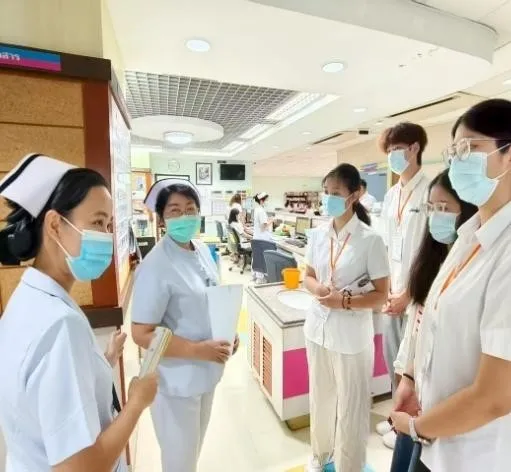
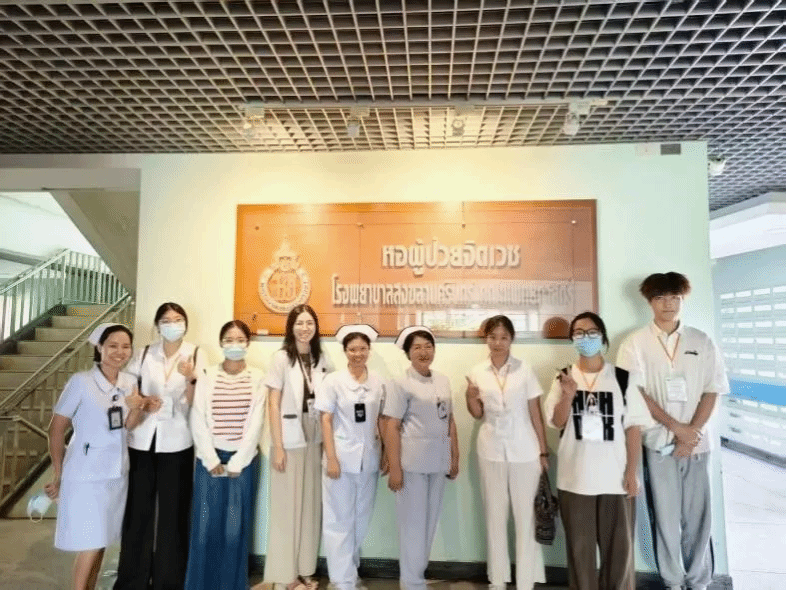
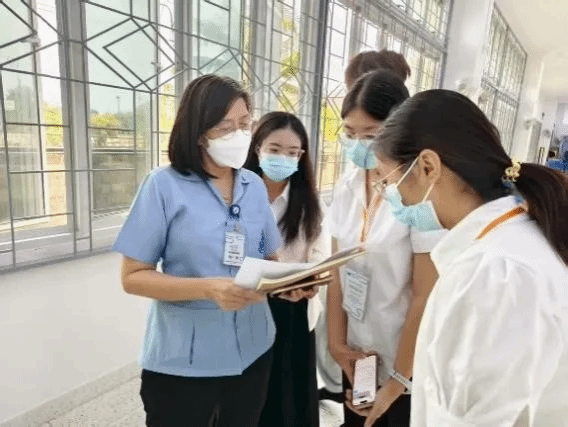
Approaching Thailand’s Frontline Healthcare: Experiencing Mental Health and Substance Abuse NursingDuring an in-depth visit to Thailand’s medical system, teachers and students of the exchange group successively visited PSU Hospital (Affiliated Hospital of Prince of Songkla University) and local drug rehabilitation institutions, gaining first-hand knowledge of practical models for mental health and substance abuse nursing.
In the psychiatric ward of PSU Hospital, strict standardized management went hand in hand with humanistic care. Entry into the ward required nurses to swipe cards or open doors remotely; ward capacity was limited to 15 patients, with separate "VIP observation areas" and "public activity areas". Newly admitted patients received comprehensive assessments in the observation room for the first two days. Nurses conducted "dual assessments" using tools such as violence behavior scales and depression symptom assessments, and strictly implemented the "three checks and seven verifications" during medication administration. For patients with drug allergies, nurses attached labels to their wristbands and provided full-time escort to prevent accidents.
Humanistic care was evident in every detail of the ward: gender-separated management; bathrooms open at fixed hours while toilets available 24/7; patients’ paintings and handcrafts hung on walls to foster a positive atmosphere; multidisciplinary teams held regular discussions to formulate personalized care plans; and an information system enabled "one-click inquiry" of patients’ conditions. Thai medical staff demonstrated through actions that healthcare providers and patients are the best partners.
Clinical Practice (Part 2):
Witnessing Persistence and Hope in Substance Abuse NursingDuring the visit to the Chatchaba Substance Abuse Ward of Thunyarak Hospital in Songkhla Province, the exchange group deeply felt Thailand’s commitment to both professionalism and humanism in substance abuse nursing. The ward only admitted patients aged 18 and above, with strict gender-separated management. Newly admitted patients first received a one-month detoxification treatment; for those with psychiatric symptoms, medical staff intervened with standardized antipsychotic medications.
The circular activity area in the ward symbolized reconstruction and hope, where patients gradually regained a sense of life value through labor. Meanwhile, psychological courses analyzed the harms of drugs in depth to awaken patients’ determination to quit addiction. The nursing team paid special attention to observing high-risk patients, closely monitored potential escape tendencies, and arranged dedicated staff for intervention and support.
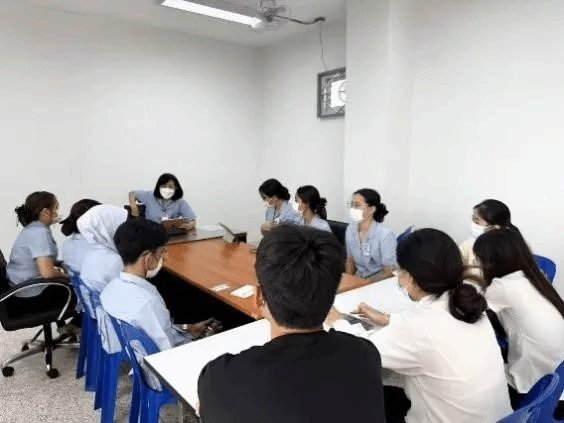
During a case discussion, a patient with complex conditions suddenly attempted to escape the ward. Though quickly restrained, their struggle reflected not only resistance to the pain of detoxification, but also a distorted longing for "freedom". When the patient was brought back, the contradictions and yearnings in their eyes made teachers and students present deeply realize that addiction recovery relies not only on medical and institutional support, but also on healthcare providers walking alongside patients through darkness and pain. This scene touched everyone profoundly—healthcare care is the light that pierces the darkness, offering hope and strength when patients need it most.
Clinical Practice (Part 3):
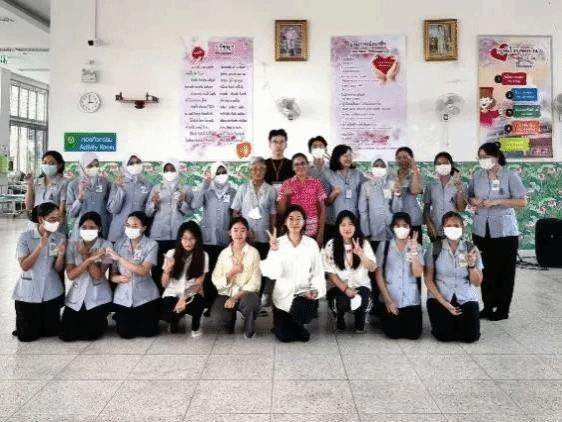
Exploring Psychiatry at Hat Yai Hospital: Addressing the Challenge of Youth Mental HealthDuring the visit to the Psychiatry Department of Hat Yai Hospital, the exchange group gained in-depth understanding of the local mental health management system. The hospital implemented strict standardized diagnosis and treatment processes: outpatients or emergency patients first received preliminary assessment and medication intervention, and only those meeting admission criteria were hospitalized. After admission, the nursing team formulated personalized daily rehabilitation plans based on 7-day re-evaluations, covering physical exercise, life skills training, meditation and yoga. For patients with substance addiction, medical staff implemented tailored intervention plans after comprehensive assessment, and referred severe cases to higher-level institutions promptly.
Through in-depth communication and observation, students keenly noticed the growing trend of youth mental health issues locally. In-depth reflection and discussion identified three main causes: first, addictive substances were highly disguised and easily accessible, increasing teenagers’ exposure risks; second, academic and family pressures led some adolescents to emotional distress, turning to drugs to escape reality; third, immature teenagers lacked self-control and were vulnerable to external misleading. This finding prompted further reflection on global mental health challenges, providing valuable insights for future cross-cultural nursing education and mental health intervention.