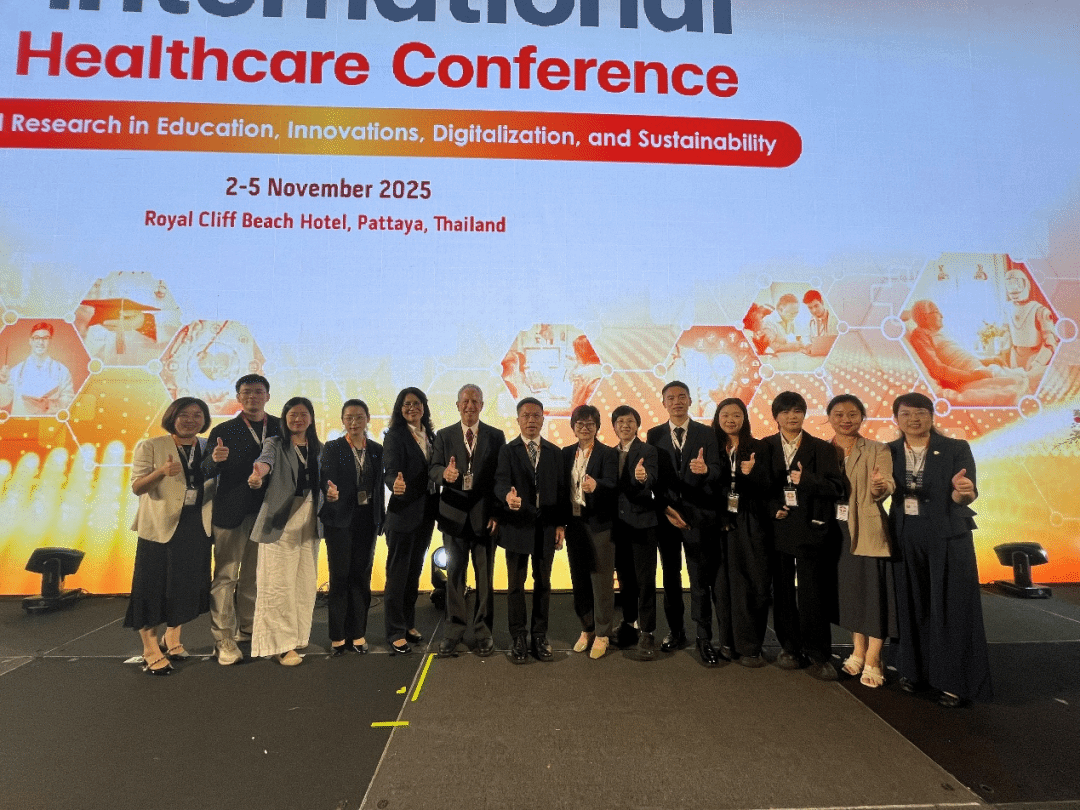
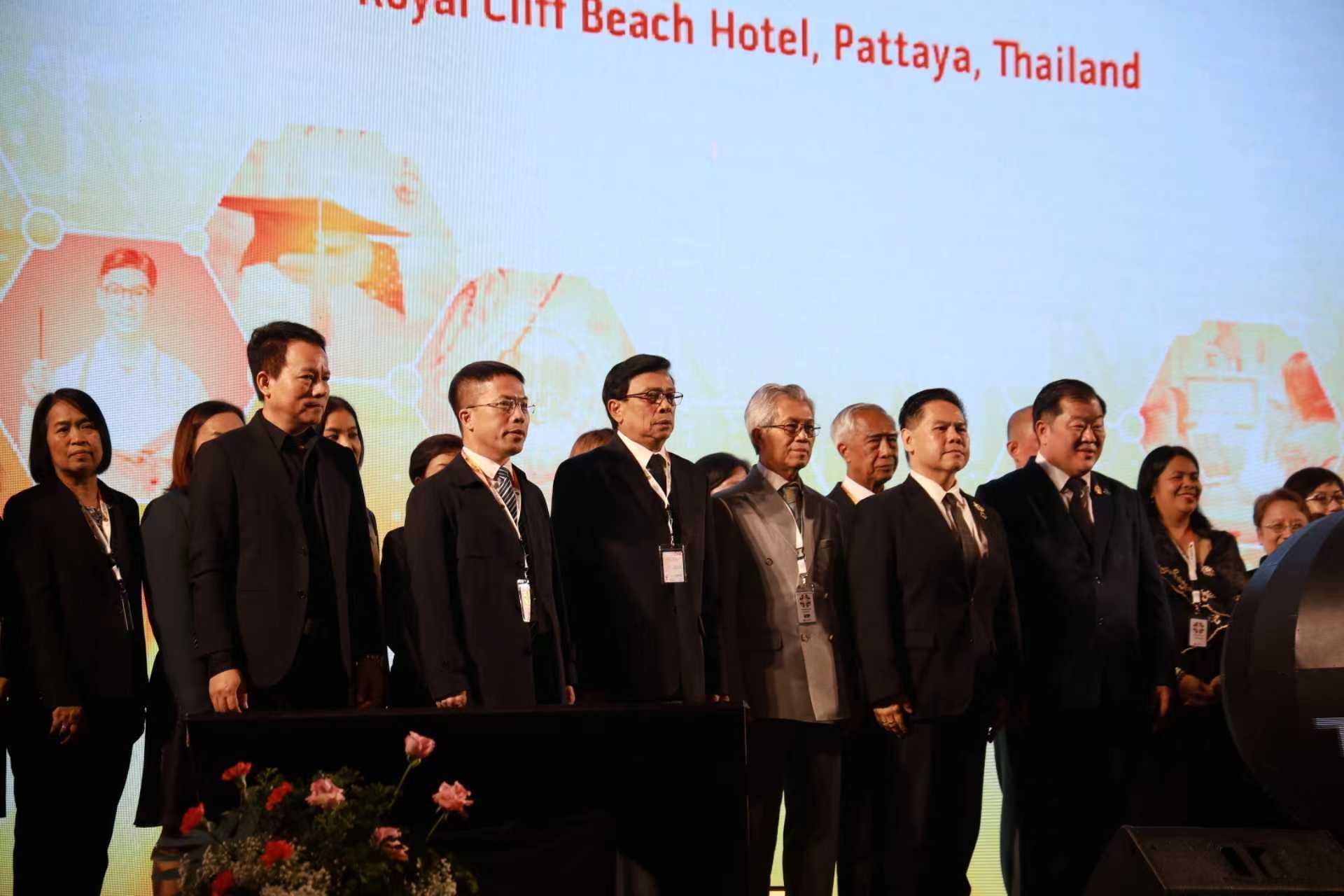
From November 2nd to 5th, "The First International Healthcare Conference - TRENDS", hosted by Burapha University (Thailand) and co-organized by Wenzhou Medical University (WMU), was grandly held in Pattaya, Thailand. Centered on the core theme "Translational Research in Education, Innovations, Digitalization and Sustainability", the conference gathered numerous scholars from 11 countries to discuss the frontiers of nursing innovation and sustainable development.
Dean Cai Fuman of WMU’s School of Nursing led a delegation of nearly 20 members, including outstanding teachers from the School of Nursing, clinical nursing experts from WMU’s First Affiliated Hospital, Second Affiliated Hospital, and Affiliated Eye Hospital, young backbones of the School of Nursing pursuing doctoral degrees in Thailand, as well as more than 10 nursing postgraduates from the China-Thailand joint training program. This diversified team composition fully reflects the depth and breadth of WMU’s strengths in education, clinical practice, and international talent cultivation, and demonstrates its comprehensive capabilities in nursing research and practice. As the first time WMU’s nursing discipline has participated in an international conference as a co-organizer overseas, this event fully showcases the university’s practical achievements in global health governance and academic cooperation, setting a strong example for the international development of Chinese nursing research and practice.
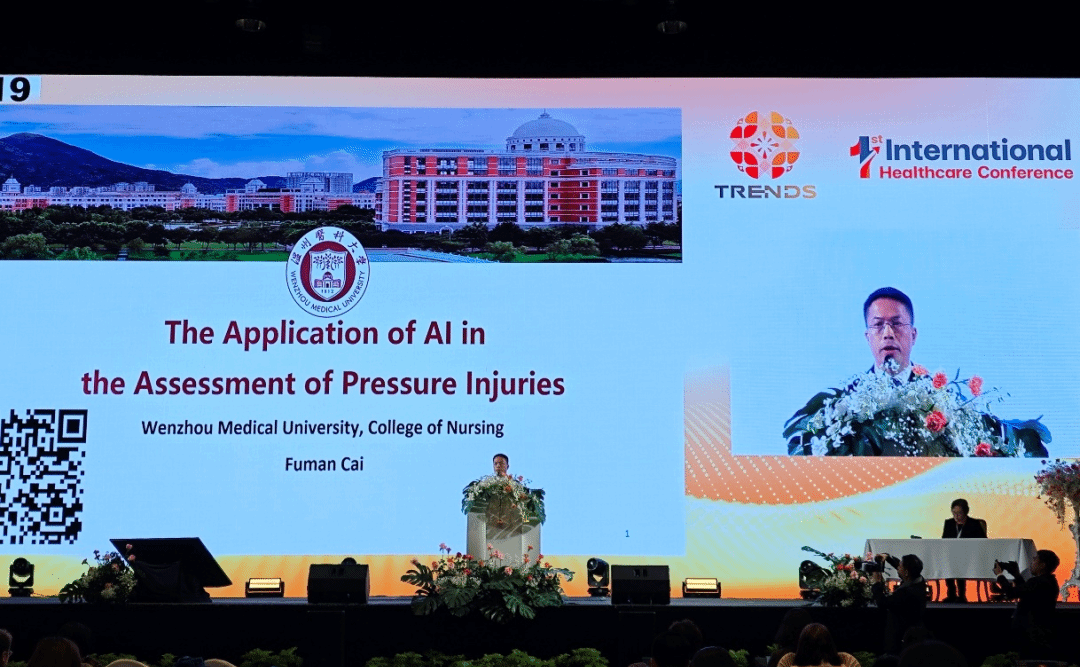
In the "Scientific Report" keynote session, Dean Cai Fuman—one of the three keynote speakers—delivered a report titled "The Application of AI in the Assessment of Pressure Injuries". He systematically introduced the innovative applications and practical outcomes of WMU’s chronic wound care team in AI-enabled pressure injury assessment, highlighting the cutting-edge exploration of digital transformation in the nursing discipline. The report sparked enthusiastic discussions and high praise from participating experts.
In recent years, the team led by Professor Cai Fuman has established a Chronic Wound Care Research Center and a specialized laboratory capable of independent basic and AI research. Focusing on pressure injury mechanism research and AI-based assessment, the team has carried out interdisciplinary talent recruitment, training, and research cooperation. To date, they have published over 20 academic papers on the pathogenesis of pressure injuries and intelligent nursing assessment in authoritative domestic and foreign journals, including British Journal of Dermatology (IF=9.6), Journal of Advanced Research (IF=13.0), Mater Today Bio (IF=10.2), and Chinese Journal of Nursing. Their research has been selected into the "Top 100 Excellent Papers" by the Chinese Nursing Association. The team has also obtained 9 national invention patents and 7 utility model patents, with 2 patents successfully transformed into industrial products. Additionally, they have compiled 3 international wound care guidelines and 1 monograph.
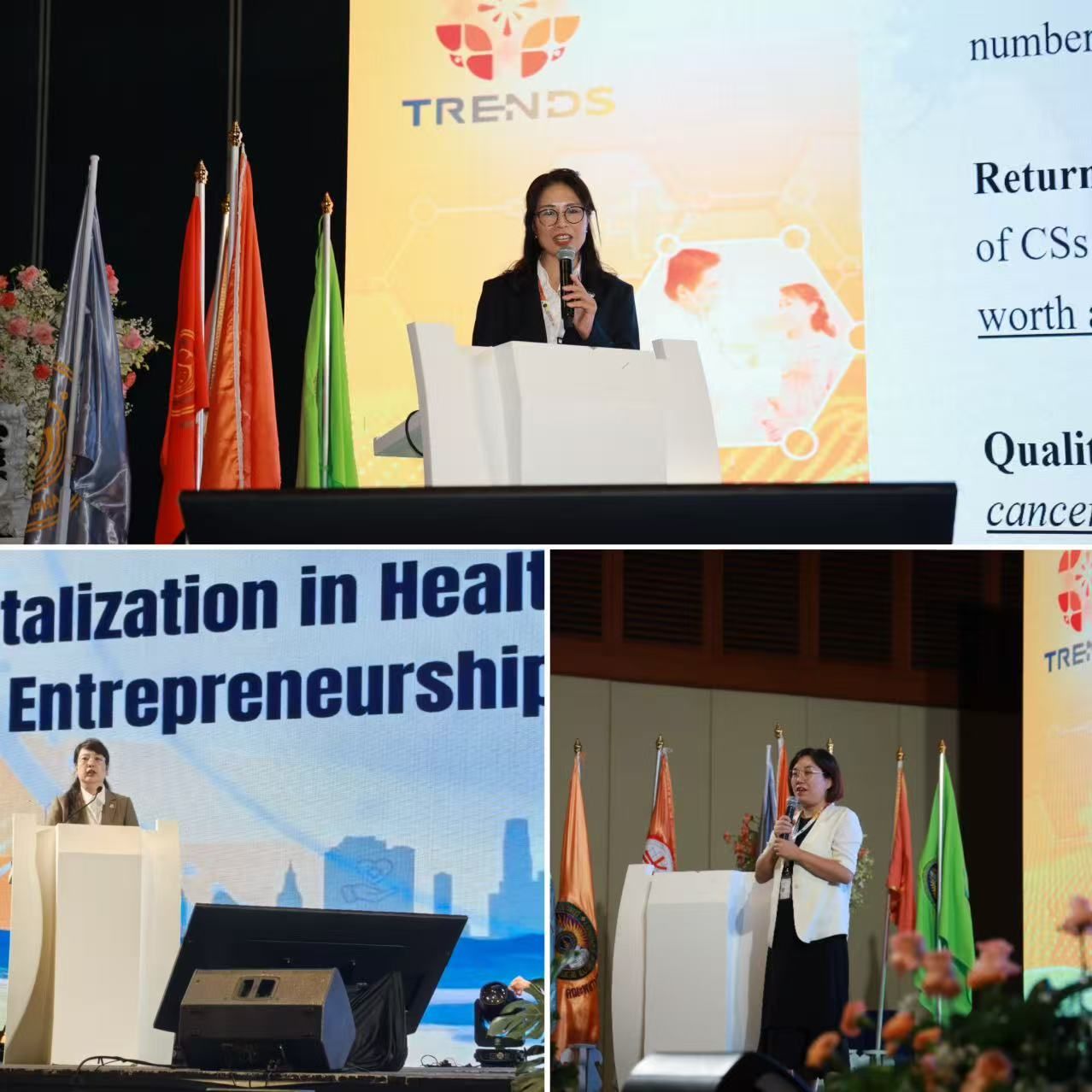
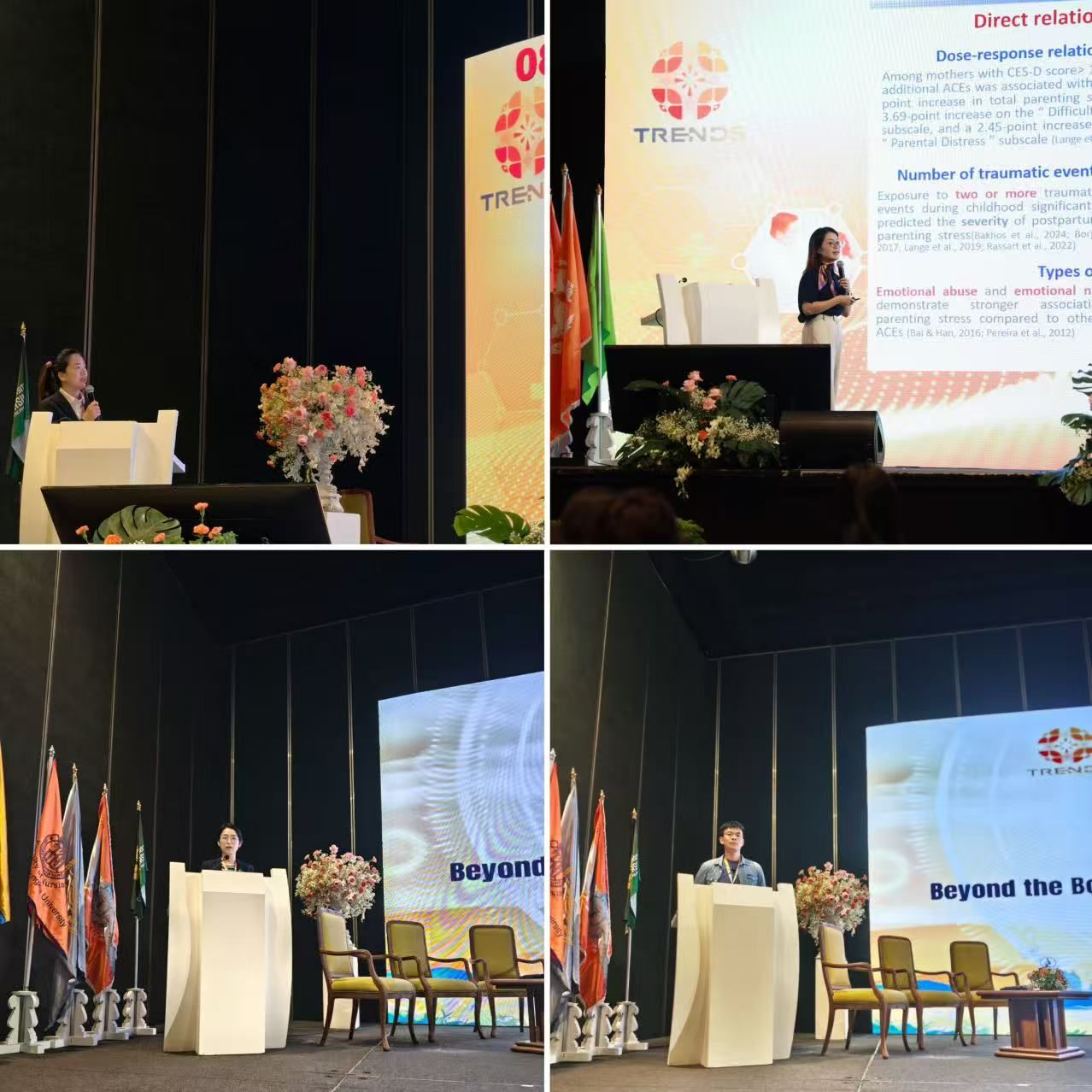
Other members of the WMU delegation also actively showcased their research, demonstrating the university’s diverse strength in nursing science and practice.
On the occasion of the 50th anniversary of the establishment of diplomatic relations between China and Thailand, this international nursing conference co-hosted by the two universities not only builds a high-level academic exchange platform for WMU and global scholars but also showcases the innovative achievements of Chinese nursing research and practice. It marks a new chapter of "connecting the world and co-creating a healthy future" in China-Thailand university cooperation. Over the years, WMU and Burapha University have achieved remarkable results in joint education, launching master’s programs in nursing and the "3.5+1.5" integrated undergraduate-master’s program, nurturing a large number of high-level international talents for the medical and health sectors of both countries. Building on this solid foundation, WMU will continue to deepen international cooperation, promote the nursing discipline towards digitalization, intelligence, and sustainability, and contribute more Chinese wisdom to the global health cause.
